
There’s a little electric co-op office downtown — a brick shoebox of a building with one window, a rack of brochures no one reads, and a bell on the door that rings a little too loudly every time someone walks in. I pass it almost every day.
For years, it was usually empty.
Lately, it hasn’t been.
Now when I pass by, I see people standing quietly near the counter holding envelopes, phones, folded paperwork. Sometimes they’re there to make partial payments. Sometimes to ask for extensions. Sometimes just to figure out what happens next.
Last Tuesday, a couple stood at the counter whisper-arguing the way people do when they’re trying not to sound worried in public. One held a shutoff notice. The other had a banking app open on their phone. They weren’t discussing luxuries or vacations or bad spending habits. They were deciding which bill could wait.
That same morning, I had read another report showing utility debt continuing to rise across the country. Past-due balances are climbing while energy costs remain elevated in many areas. On paper, it looks like another economic data point.
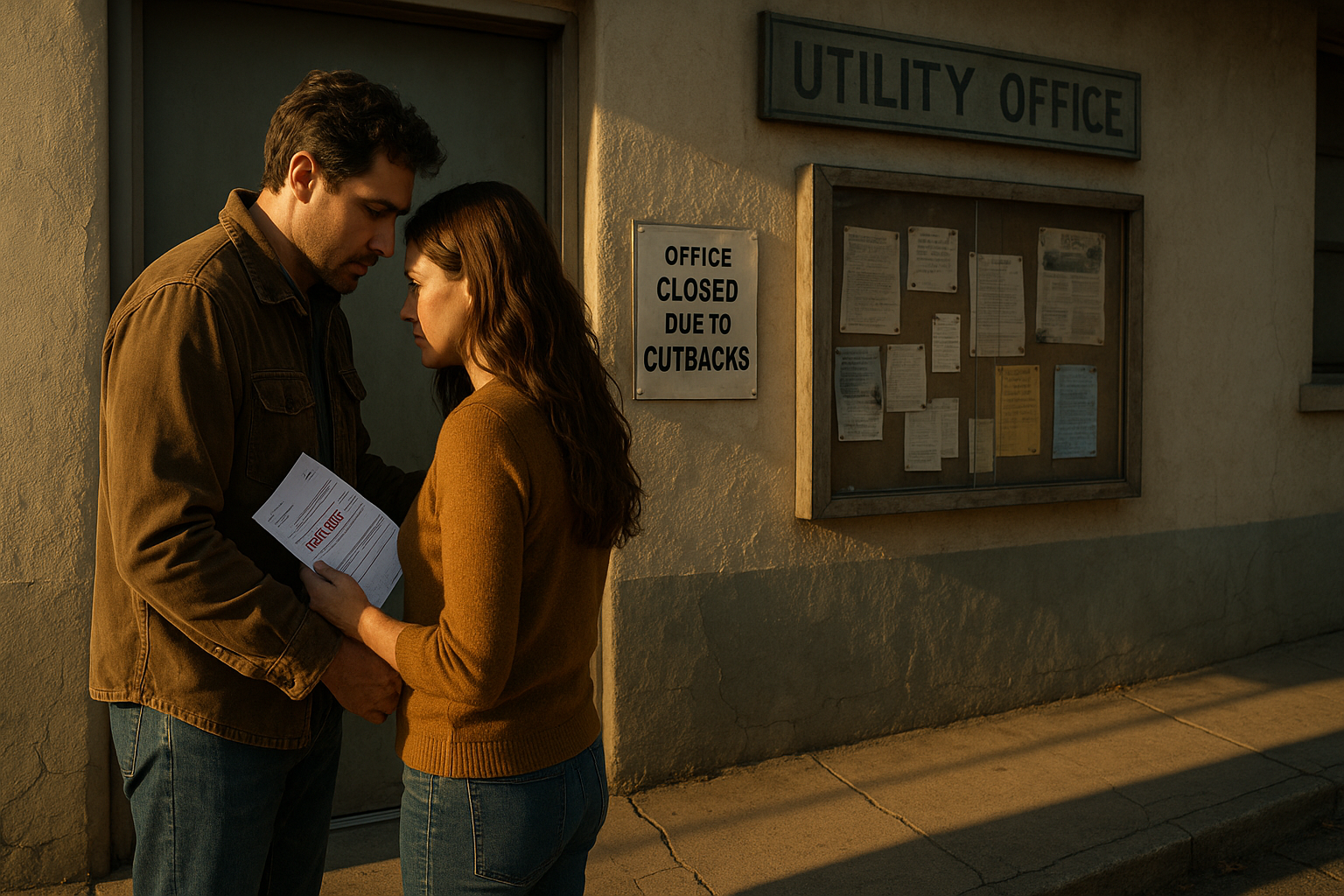
In practice, it looks like people quietly running out of room.
That’s the part I think gets missed sometimes.
This isn’t really a story about electricity. Or natural gas. Or even utility companies.
It’s a story about what happens when households lose margin.
Because most people do not simply wake up one month and stop paying their utility bill. A lot usually happens first.
The grocery budget gets tighter.
The tank gets filled halfway instead of all the way.
A family delays replacing tires another month.
Someone skips a dentist appointment they were already putting off.
The streaming subscriptions disappear first. Then eating out. Then small conveniences people once considered normal enough not to think about.
People think budgeting is numbers.
It’s not. It’s triage.
And once you start looking for the signs of that triage, you notice them everywhere.
The laundromat raises wash prices by a quarter.
The local diner starts offering fewer sides with breakfast.
A grocery store shifts more discounted items toward the front because customers are actively searching for markdowns now instead of stumbling across them accidentally.
These are small adjustments individually. But together they tell you something important about the financial condition of a neighborhood.
Economists sometimes use the phrase “energy burden” to describe the percentage of income households spend simply keeping utilities running. In many working-class neighborhoods, that burden tends to be higher because the housing stock itself is older.
Drafty windows.
Poor insulation.
Old appliances.
Aging furnaces.
Families with tighter budgets are often living in homes that cost more to heat, cool, and maintain in the first place. Two households can experience the same utility increase very differently depending on the structure around them.
That’s one of the quieter realities of economic pressure: systems shape outcomes long before individual decisions enter the picture.
And right now, many households appear to be carrying strain across multiple systems at once.
Inflation has moderated compared to its peak, but moderation is not the same thing as recovery. Prices that rose sharply over several years generally remain high even after inflation slows. Rent rarely retreats. Insurance premiums rarely retreat. Grocery prices may stabilize, but stabilization happens at the new level.
People do not experience inflation the way economists chart it.
They experience it through accumulation.
A little more here.
A little more there.
Until eventually the monthly margin that once absorbed normal problems no longer exists.
That disappearing margin changes behavior in subtle ways before it creates visible crisis.

People become more cautious socially.
More exhausted mentally.
Less willing to take risks.
Small emergencies begin carrying outsized consequences because there’s no recovery room built into the household budget anymore.
Stable societies usually depend on ordinary people feeling reasonably confident that temporary setbacks remain temporary. Once enough households begin feeling permanently exposed, trust starts thinning out around the edges — not because people become bad, but because chronic financial stress narrows attention toward immediate survival and short-term protection.
You can already see traces of it in everyday behavior: fewer spontaneous purchases, more quiet financial comparisons between friends, more conversations that drift toward cost before anything else.
And utility debt matters because utilities are among the last bills many people stop paying.
People will postpone vacations before utilities.
They’ll delay clothing purchases before utilities.
Many will juggle credit card balances for months before risking shutoff notices.
So when utility debt rises noticeably, it often signals that households are already deeper into financial strain than broader conversations acknowledge.
The political conversation around energy costs tends to become combative almost immediately.
Some people blame environmental policy.
Others blame corporate consolidation, infrastructure failures, underinvestment, regulation, deregulation, or regional energy strategy.
The truth is that energy systems are genuinely complicated. Modern grids require enormous investment, maintenance, fuel coordination, regulatory balancing, and long-term planning. There are real tradeoffs involved in affordability, reliability, environmental concerns, and future infrastructure needs.
Reasonable people can disagree about how those tradeoffs should be handled.
But regardless of where someone falls politically, the underlying reality remains the same: a growing number of households appear increasingly vulnerable to routine expenses that once felt manageable.
That vulnerability changes communities slowly.
You notice more payday loan advertisements near bus stops.
You hear more conversations about payment plans.
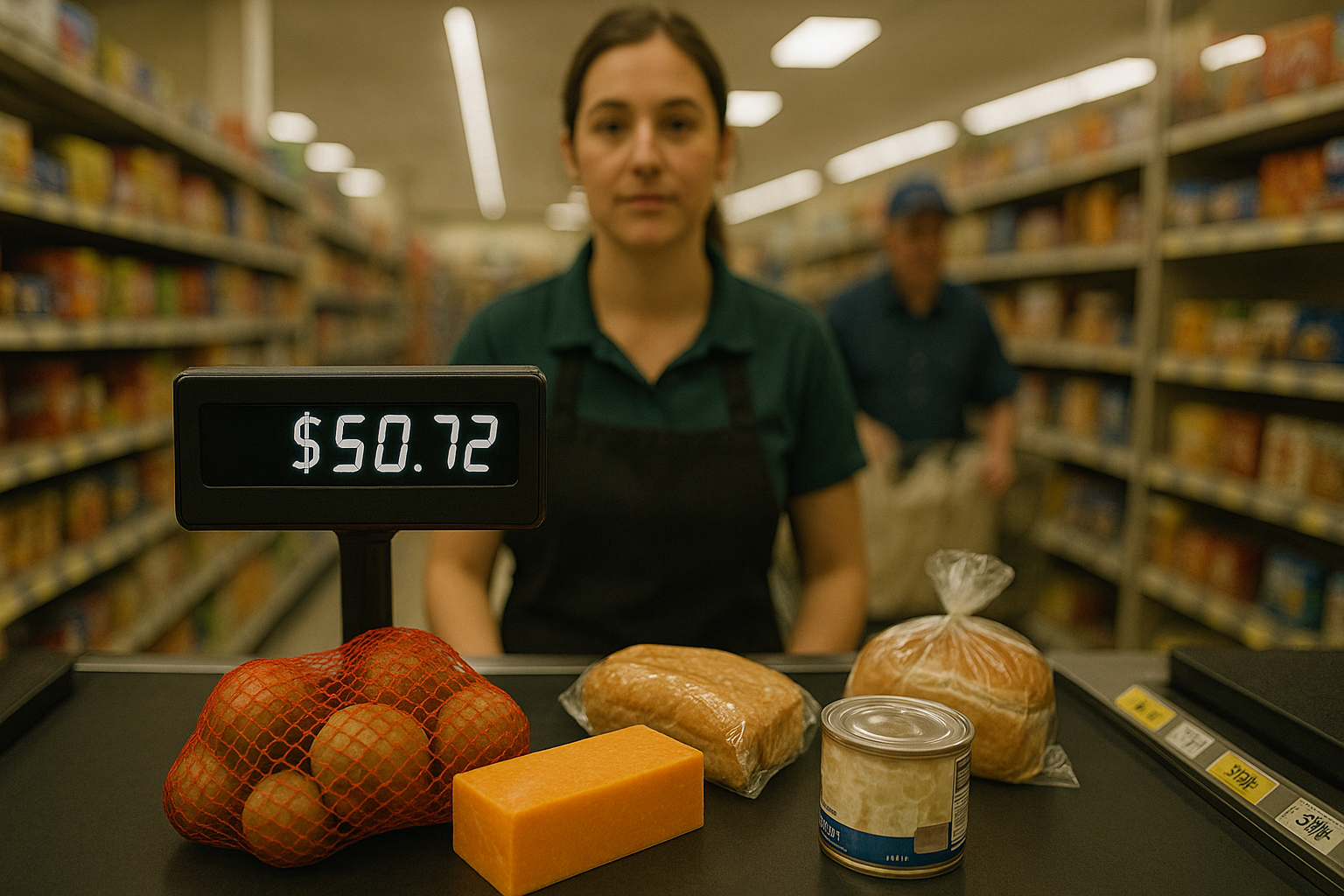
You see more people calculating totals carefully at checkout counters instead of casually unloading carts.
Even local businesses start adapting to thinner consumer margins.
And many of the people feeling this pressure would not describe themselves as poor.
That distinction matters.
A lot of Americans still think of financial hardship as something that happens to “other people.” But over the past several years, many households that once considered themselves reasonably stable have started experiencing a different kind of insecurity — not collapse, but fragility.
That fragility is difficult to measure emotionally because outward appearances often remain normal.
The lights are still on.
The car is still running.
The rent is still technically paid.
But underneath those visible signs of stability, more households appear to be operating with almost no buffer left.
That’s where utility debt becomes important.
Not because unpaid bills are new.
Because the loss of financial breathing room appears to be spreading further into the middle of ordinary American life.
There are assistance programs designed for moments like this, including LIHEAP and various state-level utility relief efforts. Some families rely on them temporarily during difficult periods. Others never apply even when eligible because they still view themselves as people who should be able to manage on their own.
There’s pride involved in that.
Sometimes shame too.
But mostly, from what I’ve observed, there’s confusion.
People are trying to understand how basic stability became this difficult to maintain while working full-time, following the rules, and making what used to be considered responsible decisions.
That question hangs quietly underneath a lot of conversations right now.
I keep thinking about that couple at the co-op office.
They made their decision in less than a minute. One nodded. The other sighed. Then they walked out together carrying the same envelope they walked in with.
No dramatic scene.
No breakdown.
Just another ordinary negotiation inside a household trying to preserve a little room to breathe.
And I suspect that’s the part of this story worth paying attention to.
Not the politics.
Not the outrage.
The narrowing margin.
Because when enough people begin living without margin, even small disruptions start carrying the weight of emergencies.
And countries often feel that kind of strain long before they fully understand it.
TL:DR
The Liberty Formula — 99 > 47 + 1 — is a symbolic reminder that ordinary Americans likely have more in common with each other than with the systems and incentives constantly competing for their outrage, loyalty, and attention. Tyler Mokoi reflects on rising distrust, political exhaustion, growing division, and the dangerous normalization of civic fatalism in America. The article argues that while disagreement is inevitable, losing the ability to function as a shared society is far more dangerous — and that reclaiming unity around shared pressures may be the first step toward rebuilding trust.